Unified, Governed & Intelligent Enterprise Operations
Opstral observes, investigates, resolves and optimises across production systems allowing operations to recover faster and stay in control. It unifies telemetry, operational knowledge and your existing tools under one governed AI core enabling autonomous possibilities
- Works with the stack you already run
- Acts with approval, audits every step
- Sentinel finds root cause, executes the fix
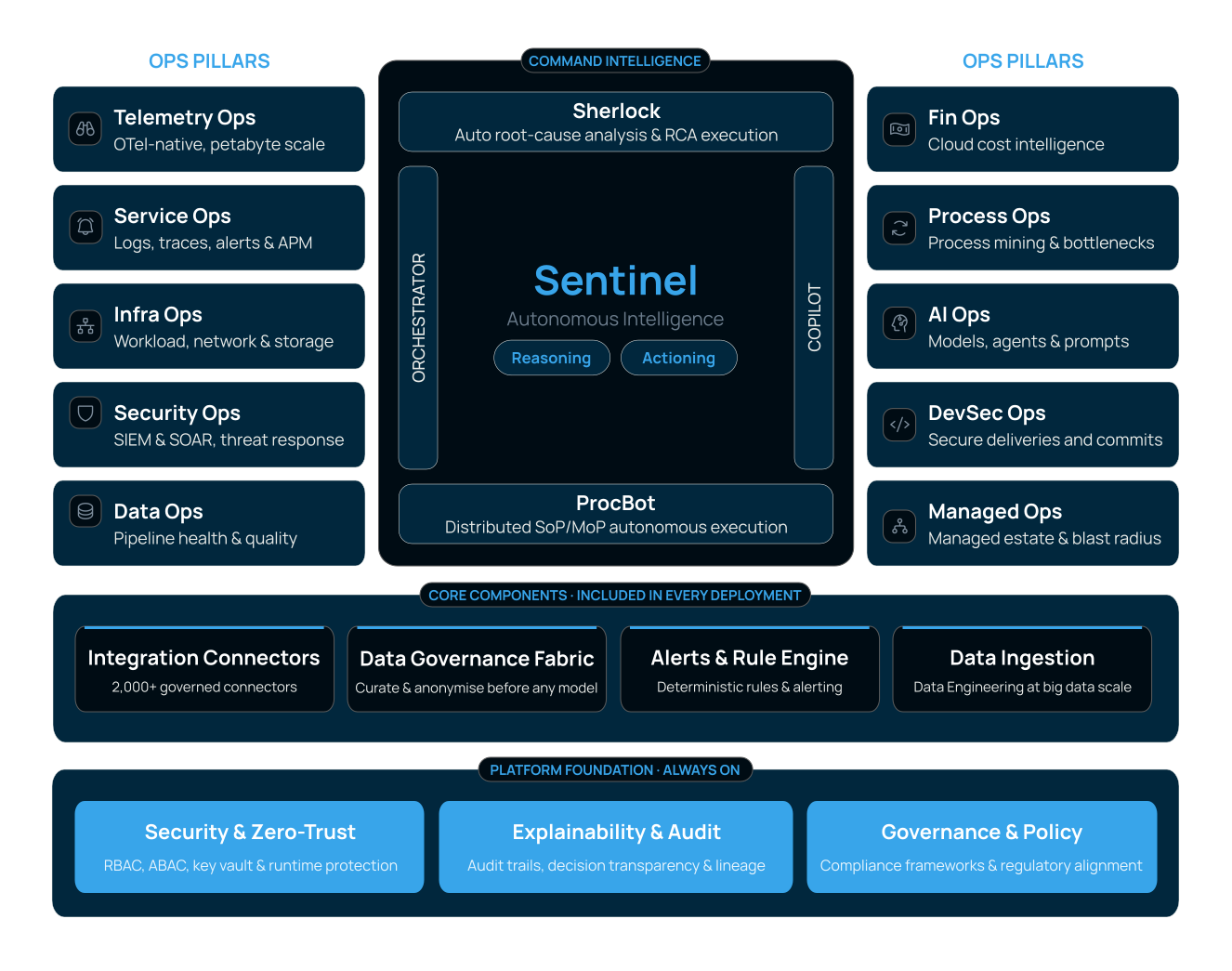
- In production at carrier-scale enterprises650 services under monitoring, ~62,000 telemetry rows per second, in one measured deployment.
- On-prem, your cloud, or air-gappedDeploys where your data must live, hardened into your vault, WAF and identity stack.
- ISO 27001 · SOC 2 · GDPR assessedIndependently certified and audited, with security controls built into the platform.
What Is Opstral
Autonomous operations, governed end to end
Opstral is the operations intelligence platform for NOC, SRE, IT and platform teams. Sentinel AI connects your tools and knowledge, Sherlock investigates and verifies, and Procedure Bots execute approved actions. Your team stays in control, whether you deploy in the cloud, on-premises or air-gapped.
End Tool Sprawl
Your ops team is drowning in tools, not answers.
A dashboard for metrics, a terminal for infrastructure, a SIEM for security, a cost tool for spend, an ITSM for tickets. Each with its own login, query language and half of the truth. Opstral puts one governed layer over the production stack you already run, so every signal lands in one place and nobody rebuilds context console by console. Error rate spiking on one of your services? One question, answered across every source in a single pass.
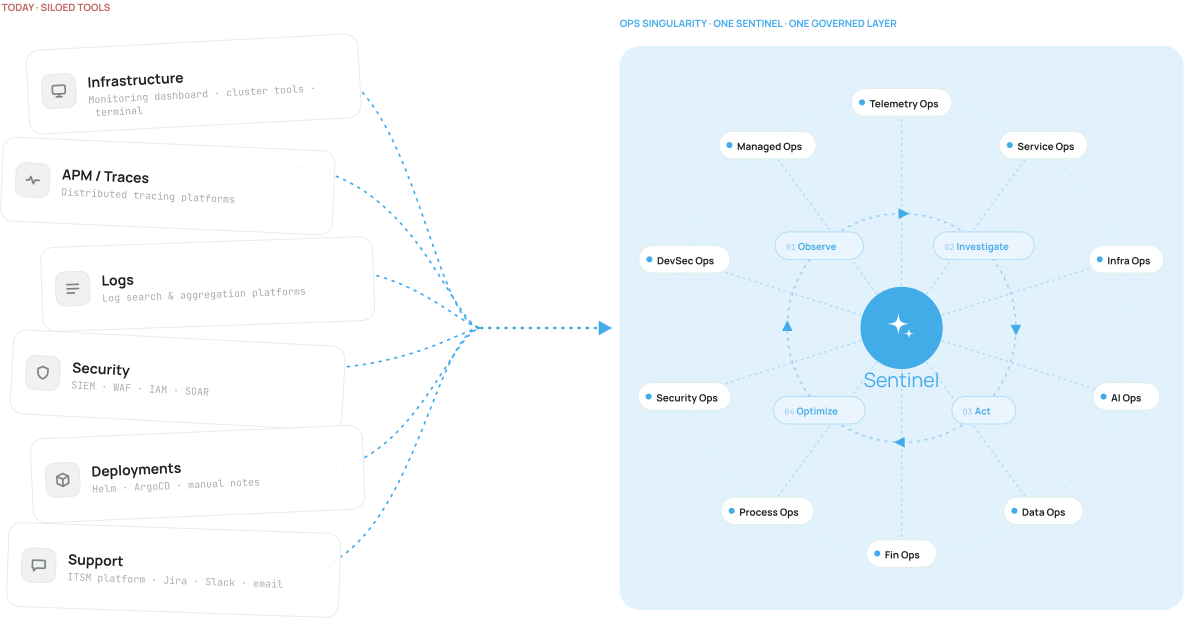
- One layer, not another toolIntegrates with and leverages what you run today. We do not change your tools; we make them work with each other.
- Cross-platform federated detectionCorrelates across ITSM, ERP, CRM, HR and identity, incidents no single-platform AI can even see.
- Open by designOpenTelemetry-native ingestion for logs, metrics and traces; every other source arrives through governed connectors. Your telemetry stays portable.
- 2,000+governed integration connectorsevery production signal source, wired once into one intelligence layer
Resolution, Not Detection
Detection is table stakes. Resolution is the job.
Your stack is very good at telling you something broke; it cannot fix it. When an alert fires in production, Sentinel investigates every connected source at once, before anyone is paged, and delivers evidence-backed root cause with citations in minutes. Known incident patterns are resolved autonomously under approval policies your team defines; your engineers stay in the loop and are engaged wherever judgment is needed.
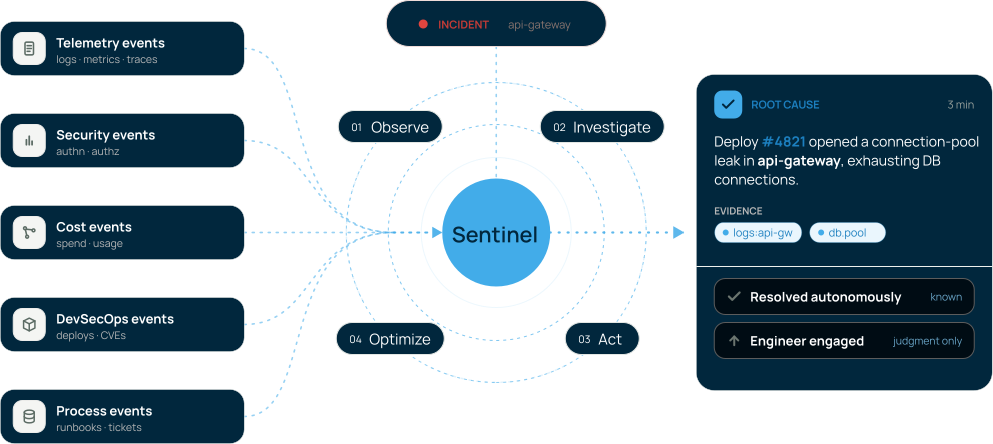
- Service-affecting first, with evidenceIncidents that touch the service are identified and prioritised first, and every finding traces back to its evidence so anyone can verify the reasoning.
- Conversational operationsEngineers investigate in plain English; L1 triages with evidence that used to need an L2, and mundane diagnostic legwork disappears.
- Proactive, human in the loopA user fails login five times? Sentinel has pulled the logs and reported before the user complains. Brute force on a production server? It calls the owner before isolating.
- 43%average MTTR reduction, measured in productionaverage across incident classes within six months of go-live at a carrier-scale deployment; reductions vary by incident type. Faster because every connected source is investigated at once and known patterns execute immediately.
This platform was not built in a lab. It was shaped by live production incidents, change freezes and audits, and it is designed production-hardened: security as the default, not an add-on. And it does not stop at its own boundary: it is implemented into your ecosystem, your vault, your WAF, your identity stack, so the hardening principles extend to the estate around it.
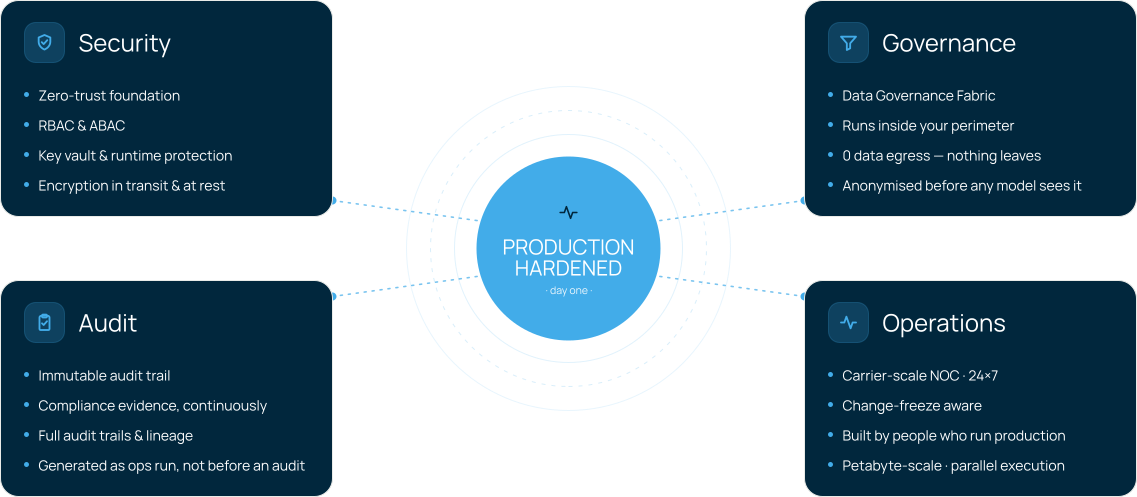
- Built by people who run productionThe same team operates carrier-scale NOC and managed services estates today. The platform ships with that operational muscle memory built in.
- Security first, certified to prove itZero-trust foundation with role-based access control, key vault and runtime protection as the baseline, certified to ISO 27001 and SOC 2 with GDPR-assessed data handling. It integrates with the vault, WAF and identity you already trust.
- Scalable by designA petabyte-scale data foundation, with investigations and procedures running as containerized jobs in parallel across your estate. Measured in one live deployment: 650 services under monitoring, with around 62,000 telemetry rows ingested per second across metrics, logs, traces and profiling.
- 6-9months live in productionacross enterprise deployments at carrier-scale estates. Hardened where slow resolution, manual toil and audit gaps all cost money, not downtime alone.
- ✓ Hardened in production
- ✓ In production with enterprise customers today
Your telemetry, tickets and identity data are the crown jewels, and most AI platforms ask you to hand them over blind. The Data Governance Fabric curates and anonymises data before it reaches any model, access is typed least-privilege, and every decision the platform makes is explained, with citations you can verify.
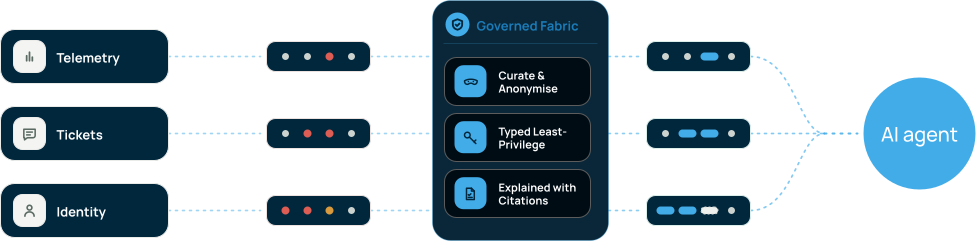
- Curated & anonymised before any modelRaw production data is never handed to a model; the Data Governance Fabric filters and masks first.
- Typed least-privilegeSentinel reads; ProcBot and Sherlock act, each under explicit, scoped grants. No component holds more access than its job.
- Explained, with citationsEvery finding traces back to the evidence it was drawn from. An engineer who asks why a fix was applied gets the answer with the evidence behind it, not a black box.
- Everydecision explained, with citationsnothing the platform concludes or does in production is a black box
Knowledge Retention
Tribal knowledge that stops walking out the door.
The engineer who knows why the checkout service fails every time the pricing service deploys. The access model only two people understand. The runbook on a sticky note. Opstral documents that institutional knowledge into governed, versioned procedures that ProcBot executes and Sherlock validates, so the knowledge lives in the system rather than in one person's head, and every fix makes the next one smarter.
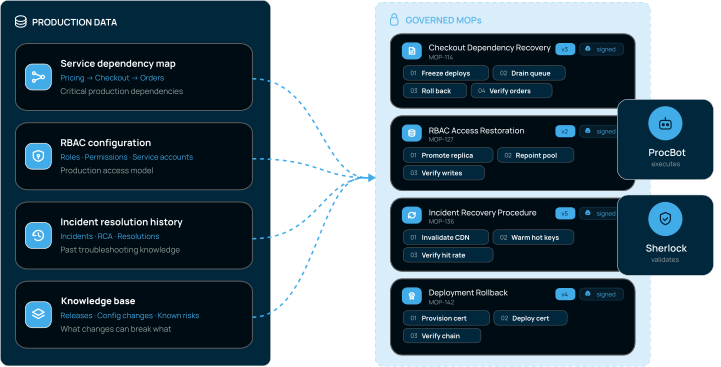
- Documented once, runs governedOperations procedures, and the business processes that depend on them, become governed MOPs that L1, L2, L3 engineers or the platform itself can run.
- Validated, not assumedSherlock checks every fix against live metrics and scores procedure effectiveness.
- New engineers inherit years of knowledge from day oneThey execute proven procedures from day one instead of learning by outage.
- ~60%of routine, mundane operations automatedMeasured in productionmeasured in production across live Opstral deployments, stated conservatively; security-sensitive steps and anything needing judgment stay manual by design.
On-Prem · Air-Gapped · Sovereign
On-prem. Air-gapped. Sovereign to the model.
Most AI platforms need your data to leave; regulated and sovereign environments cannot allow it. Opstral is built for on-prem, air-gapped and sovereign deployment, and that includes the AI itself: LLM inference runs inside your perimeter, on your hardware, with self-hosted models Opstral ships or local models you bring. The Data Governance Fabric curates and anonymises data before any model sees it. Sovereignty here is not a deployment option bolted on later; it is how the platform was designed.
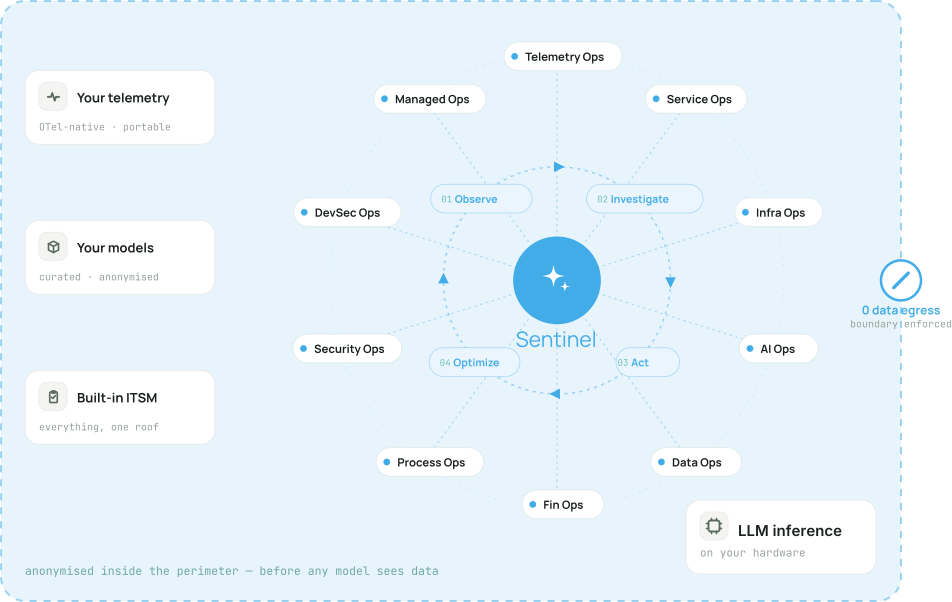
- The AI stays home tooLLM inference on your hardware: bundled open-weight reasoning models (120B-class), or local models you bring, benchmark-tested against operations workloads before rollout. No callbacks, no third-party model APIs, no training on your data.
- Air-gapped is the same platformFull capability inside your perimeter, updated by signed offline artifacts. Not a reduced variant.
- Sovereign for the strictest reviewersData residency by construction for regulated enterprise and government, with audit trails and lineage generated as operations run.
- 0data egress requiredfull capability inside your perimeter, air-gapped included. Your telemetry, your knowledge, your models and your inference stay home.
Own Your Automation
Own your automation. Not another vendor's roadmap.
Build, tailor and own your solutions in the Agent Studio: your logic, your IP, on open standards. Every agent, automation, MOP (Method of Procedure) and dashboard your team creates on the platform is your intellectual property, versioned, portable and yours to keep. No black boxes, and no SI relationship for life.
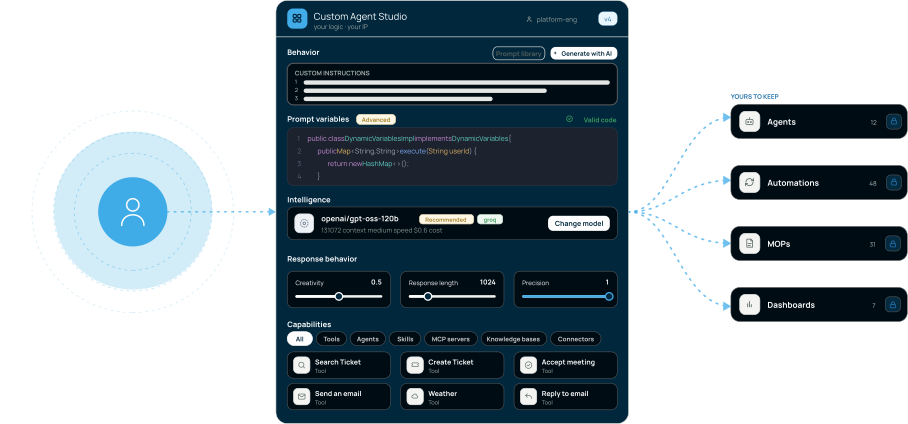
- Your logic, your IPWhat your team builds in the Studio stays yours: versioned, exportable, and reusable across your estate.
- Open standards, no DSL prisonOpenTelemetry-native signals and standard tooling like Ansible, Python and shell, so nothing you write is trapped in a proprietary language.
- Extend without a services armyLow-code building means your engineers tailor the platform themselves; the vendor dependency ends where your team begins.
- 100%of what you create is your IPyour agents, automations, MOPs and dashboards belong to you; the platform is the foundation you build them on
SaaS sells your team a capability and leaves the work, and the reasoning, with them. Service as Software delivers the outcome itself: Opstral carries incidents from detection to verified resolution, and value is measured on demonstrated impact, not on seats and features. Your engineers move up a level, from operating tools to orchestrating governed agents: they design the procedures, set the guardrails and judge the work.
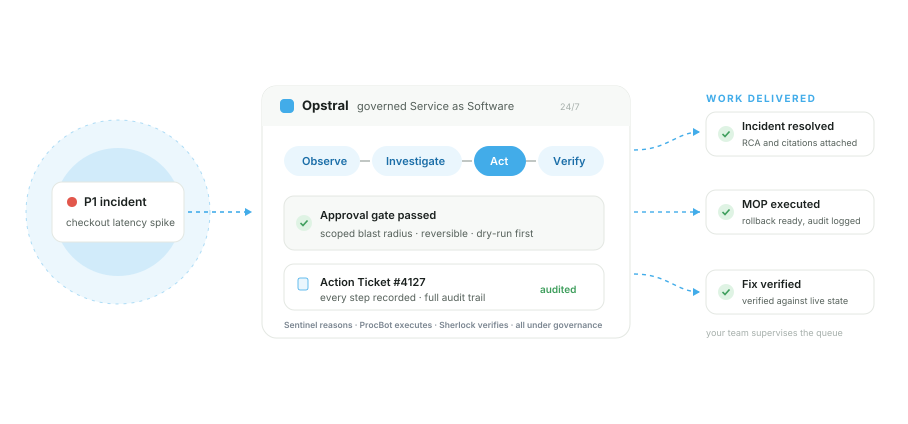
- Outcomes over accessYou are not buying screens for your team to operate. The loop delivers resolved incidents, executed procedures and verified outcomes, visible on your numbers.
- From operators to orchestratorsYour team designs the feedback loops and sets the guardrails and circuit breakers: approval gates, blast-radius scoping, hard limits. Autonomy expands as trust accrues.
- Not just done. Done well.Every decision is interpretable, with evidence and citations, and Sherlock scores each fix against live state, so effectiveness is measured, not assumed.
- ~60%of recurring faults resolved end to endMeasured in productionmeasured in production on a Tier-1 enterprise estate; the basis for every figure is stated on the case study
Asked before every evaluation. Answered here.
Nine questions that come up in nearly every first conversation, answered plainly. The full set, including pricing, POC mechanics and integration depth, lives on the FAQ page.
What is Opstral?
Opstral is an AI-native platform for enterprise operations. At its center is Sentinel AI, an autonomous intelligence engine that observes your signals, investigates anomalies, determines root cause and takes corrective action under governance. It is built for NOC, SRE, platform engineering and IT operations teams running complex estates at scale.
Is Opstral another observability platform?
No. Observability tells you what happened; it is an input to Opstral, not what Opstral is. The platform investigates why it happened, determines the appropriate response, coordinates enterprise knowledge and automation, and executes under governance across heterogeneous, multi-vendor environments.
Do we need to replace our existing monitoring tools?
No. Opstral sits on top of your existing stack, integrating with and leveraging tools like Dynatrace, Datadog, New Relic, Splunk, Prometheus, Grafana and PagerDuty. Sentinel consumes signals from your existing sources, correlates them and acts; those tools continue to do what they do well, and Opstral makes them work with each other.
What does governed Service as Software mean?
Service as Software is the inversion of SaaS: instead of a tool your team operates, the platform delivers completed work: resolved incidents, executed procedures and verified outcomes. Governed means every action is scoped to a blast radius, approval-gated where policy requires, reversible and fully audited.
Can Opstral run on-prem, air-gapped or sovereign?
Yes. Opstral is built for on-prem, air-gapped and sovereign deployment, including the AI itself: LLM inference runs inside your perimeter on your hardware, with self-hosted models Opstral ships or local models you bring. No telemetry leaves your environment, and updates arrive as signed offline artifacts.
Why can't our team just script this themselves?
Much of it they already have, and Opstral keeps it: Ansible, Python and shell scripts become governed, versioned MOPs on day one. But scripts automate known responses; they do not investigate, and nobody scripts judgment across heterogeneous signals. You are buying the investigation layer, the governance and the institutional memory.
What happens if Opstral is down, or if we leave?
Your operations keep running. Opstral is a layer over your tools, not a replacement: your monitoring still monitors, your ITSM still tickets, and your team can operate everything directly at any time. And if you leave, you take your work with you: every MOP, agent and dashboard your team built is your IP, exportable and runnable outside the platform.
Why can Opstral do what our team cannot do today?
Not because your engineers lack skill; because no human can query every console at once. Opstral holds a live, governed connection to every signal source, so it investigates all of them in parallel, applies every documented procedure instantly, and never loses context between incidents. Your team gets the same powers through plain-English investigation.
Why should we trust AI in production?
Trust in production is a governance question more than an AI question. Recommendations carry evidence, confidence and reasoning; production-changing actions run through approval policies and your change management; and executed actions are reversible and audited. Autonomy is graduated: the platform earns trust with evidence, not promises.